

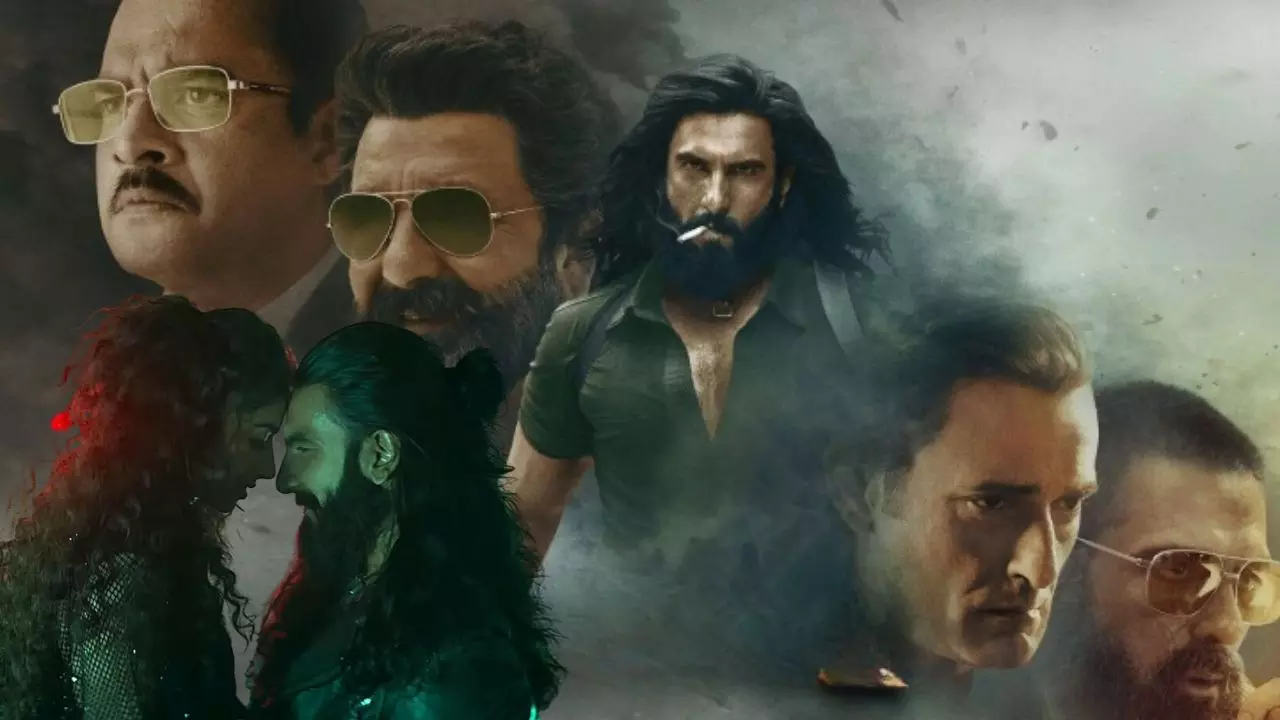
The One That Got Away: Why Manoj Pahwa Could Have Been the Definitive Jameel Jamali in Dhurandhar
By an Obsessive Student of Casting Choices Nobody Asked For
Introduction: A Confession Before the Argument
Let me begin this piece with an uncomfortable admission: Rakesh Bedi is exceptional in Dhurandhar. His portrayal of Jameel Jamali—the slum lord, the puppet master, the politician who kills with a smile—has rightfully earned him awards, box office glory, and the kind of career resurgence that makes for great Bollywood comeback stories . The 71-year-old veteran, long confined to comic relief roles in our collective memory, finally has his moment. When he tearfully told casting director Mukesh Chhabra that after 49 years in the industry, he finally felt like a star, it was impossible not to feel moved .
And yet.
And yet, as I watched the film for the third time (once for Ranveer’s electric intensity, once for Akshaye Khanna’s chilling stillness, and once specifically to study Jamali), a persistent thought lodged itself in my brain like a tune I couldn’t stop humming: What if it had been Manoj Pahwa?
This is not a critique of Rakesh Bedi’s work. It is a meditation on alternate cinematic universes. It is an exploration of how the same role, filtered through a different actor’s instrument, creates entirely different resonances. It is, admittedly, a slightly obsessive exercise in hypothetical casting—but the more I examine Jamali’s layered DNA, the more convinced I become that Manoj Pahwa could have delivered something not just different, but potentially more devastating.
Let me try to convince you why.
Part I: Understanding the Beast—Who Is Jameel Jamali?
Before we discuss who should have played him, we must first understand exactly what we’re dealing with. Jameel Jamali is not a simple villain. He is not Arjun Rampal’s Major Iqbal, a terrorist whose menace announces itself with every cold stare. He is not Akshaye Khanna’s Rehman Dakait, whose gangster pedigree carries its own theatrical weight.
Jamali is something far more insidious: he is politics personified.
The Character Breakdown:
| Aspect | Description |
|---|---|
| Official Role | Karachi-based politician and slum lord |
| Actual Function | Power broker, fixer, puppet master |
| Method | Operates diplomatically—”by hook or by crook” |
| Defining Trait | Can kill a person with a smile on his face |
| Arc | Begins backing Rehman Dakait, eventually manipulated by Ranveer Singh’s spy into turning against his own protégé |
| Rakesh Bedi’s Take | Restrained, menacing, morally ambiguous |
The character draws from a very specific real-world archetype: the South Asian political fixer who operates in the shadows, never quite dirtying his own hands, always maintaining plausible deniability while bodies pile up around him. He is the man who pulls strings while others pull triggers.
Now, here’s where it gets interesting. When Rakesh Bedi prepared for the role, he studied the speeches, diction, and body language of real Pakistani politicians, creating a composite inspired by multiple figures . This method acting approach served him well—his Jamali has a specific, grounded authenticity.
But Manoj Pahwa would have brought something else entirely.
Part II: The Instrument—What Manoj Pahwa Carries in His Bones
To understand why Manoj Pahwa could have redefined Jamali, we must first inventory his acting toolkit. Born in 1963 in Delhi to a Punjabi family that migrated from West Punjab after Partition, Pahwa carries something in his very blood that is invaluable for this role: the lived experience of partition, displacement, and the peculiar psychology of those who navigate borderlands .
The Pahwa Arsenal:
- Television Roots: Like Bedi, Pahwa cut his teeth on television, most memorably as Bhatia in the cult classic Office Office (2001) . This means he has the comic timing that audiences instinctively trust.
- The Crucial Difference: Unlike Bedi, Pahwa’s comedy never relied on being the fool. Even in Office Office, his Bhatia was perpetually exasperated, not perpetually ridiculous. There was always a dignity beneath the frustration.
- The Serious Turn: Pahwa has systematically built a filmography of characters who exist in moral gray zones. Consider:
- In Mulk (2018), he played Bilaal Ali Mohammed, a man caught between family loyalty and societal suspicion
- In Article 15 (2019), he was Inspector Brahmadutt Singh, a cop navigating caste politics with complicated loyalties
- In Dil Dhadakne Do (2015), his Vinod Khanna was a wealthy patriarch whose affability masked casual cruelty
- The Face: This is the most important part. Pahwa has what I can only describe as a “trustworthy face that you immediately suspect.” There’s a twinkle in his eye that never fully disappears, even in his darkest roles. This creates productive tension—we want to trust him, even when we know we shouldn’t.
The Critical Distinction:
Rakesh Bedi, for all his brilliance, carries the weight of our comic expectations. When he appears on screen, there’s a fraction of a second where our brain processes: “Oh, it’s the funny man from Chashme Buddoor.” The achievement of Dhurandhar is that Bedi overcomes this expectation entirely. But the fact that he has to overcome it is itself a limitation.
Pahwa, by contrast, has spent the last decade systematically dismantling any single expectation audiences might have of him. He arrives on screen as a blank slate of possibility—comic, tragic, menacing, vulnerable, all simultaneously available.
Part III: The Alternate Reading—What Pahwa Would Have Found in Jamali
Here is where we move from biography to speculation, from facts to feels. Let me walk you through a scene-by-scene hypothetical of how Pahwa might have interpreted Jamali differently.
Scene 1: The First Introduction
Bedi’s Approach: Bedi plays Jamali’s introduction with a kind of quiet authority. He establishes the character’s power without announcing it. It’s effective—we understand immediately that this man controls things.
Pahwa’s Potential: Pahwa would have played the same moment with a slight, almost imperceptible nervousness. Not weakness—never weakness—but the constant vigilance of a man who knows power can be lost as quickly as it was gained. There would be something slightly hunted behind the eyes, even as he projects absolute control.
This is the difference between playing a powerful man and playing a man clinging to power. Jamali, as written, is ultimately manipulable—he turns against his own protégé when Ranveer’s spy plays on his ambition and survival instincts . A man truly secure in his power would be harder to flip. Pahwa’s Jamali would have contained, from the very first frame, the seeds of his own undoing.
Scene 2: The Smile While Killing
Bedi has described Jamali as someone who “doesn’t shy away from killing a person with a smile on his face” . This is the character’s most terrifying attribute—the dissociation between emotion and action.
Bedi’s Approach: Bedi plays the smile as separate from the killing. It’s a mask he puts on, a performance for those watching.
Pahwa’s Potential: Pahwa would have blurred the line completely. His smile while ordering a death wouldn’t be a mask—it would be genuine. Not because he enjoys killing (though he might), but because, in his moral universe, this action is simply what power does. It’s no more remarkable than ordering tea. Pahwa’s particular gift is making the monstrous feel mundane, which is infinitely more disturbing.
Scene 3: The Manipulation by Hamza
This is the crucial turning point. Ranveer Singh’s undercover spy must convince Jamali to turn against Rehman Dakait (Akshaye Khanna).
Bedi’s Approach: Bedi plays this as a calculation. Jamali weighs options, assesses risks, and makes a cold decision. It’s logical and effective.
Pahwa’s Potential: Pahwa would have played it as something far more complicated—the slow awakening of a man who realizes he has been outmaneuvered and must salvage what he can. There would be flickers of wounded pride, moments of genuine fury quickly suppressed, and ultimately, a decision that feels less like cold calculation and more like desperate survival. We would see the human beneath the politician, which would make Jamali’s subsequent betrayals feel simultaneously more understandable and more damning.
Scene 4: The Aftermath
After the betrayal, after the strings have been pulled and the carpets yanked , what remains?
Bedi’s Approach: We see a man who has played the game and, for now, survived. There’s satisfaction in continued existence.
Pahwa’s Potential: Pahwa would have shown us the cost. The isolation. The paranoia. The knowledge that if he could be turned, so can everyone else. His Jamali would have been a man sitting alone in a empty room, surrounded by the wreckage of alliances, wondering if it was worth it. And in that wondering, we would have seen the tragedy of political power—that it ultimately consumes everyone who touches it.
Part IV: The Numbers Game—A Statistical Comparison
Let’s get clinical for a moment. Here’s what the numbers tell us about both actors:
| Metric | Rakesh Bedi | Manoj Pahwa |
|---|---|---|
| Years Active | 50+ | 40+ |
| Known For | Comedy (Chashme Buddoor, Shrimaan Shrimati) | Comedy-drama hybrid (Office Office, Mulk) |
| Dark Role Pedigree | Limited before Dhurandhar | Extensive (Mulk, Article 15, Anek) |
| Recent Trajectory | Career resurgence through Dhurandhar | Consistent character work across genres |
| Awards Recognition | Recent acclaim for Dhurandhar | Filmfare nominations for Mulk, Article 15 |
| Audience Expectation | “The funny one” | “The reliable character actor” |
The data reveals something crucial: Pahwa has been systematically building a portfolio of morally complex characters for years. His Jamali wouldn’t have been a departure—it would have been a culmination.
Part V: The “What If” That Haunts Me
Let me describe a scene that doesn’t exist. It’s the moment after Jamali has made his choice, after he’s betrayed Dakait, after the wheels of the plot have moved past him. In Bedi’s version, the character recedes slightly, having served his narrative function.
In my imagined Pahwa version, the camera holds on him just a few seconds longer than necessary. He’s alone in his office, the city of Karachi humming outside his window. For just a moment, the mask slips completely. We see exhaustion. We see fear. We see a man who has spent decades building something that could crumble in an instant. And then, as quickly as it appeared, the mask returns. The smile is back. The strings are ready to be pulled again.
This moment—this entirely fictional, entirely imagined moment—is why Pahwa could have been definitive. Because he has the ability to make us care about people we should despise. He makes us understand, without excusing. He finds the humanity in the monster, which is infinitely more unsettling than simply playing the monster straight.
Part VI: The Defense—Why Rakesh Bedi Works (And Why My Argument Isn’t An Attack)
Let me be absolutely clear: Rakesh Bedi is excellent in Dhurandhar. The film’s casting director, Mukesh Chhabra, spent over a year discussing every role, debating names for hours, ensuring every choice was deliberate and meant to surprise audiences . The decision to cast Bedi was not an oversight—it was a considered choice that paid off spectacularly.
Bedi brings something that Pahwa might not: the shock of the unexpected. Because we know Bedi as a comic actor, his turn as a menacing politician carries extra weight. It’s a casting surprise that jolts us awake. When Bedi appears on screen, there’s a moment of cognitive dissonance—wait, that’s the funny guy?—that immediately establishes Jamali as someone who defies easy categorization.
This is legitimate acting alchemy. Mukesh Chhabra’s philosophy of “placing actors in roles that shock audiences—and sometimes even the actors themselves” paid dividends with Bedi’s casting.
But—and this is crucial—shock value is not the same as depth.
The surprise of Bedi’s casting works once. On second viewing, when the surprise is gone, we’re left with the performance itself. And while Bedi’s performance is solid, it doesn’t contain the layers that Pahwa might have brought. It doesn’t invite us to keep watching, keep analyzing, keep discovering new shades with each viewing.
Part VII: The Real Test—Dhurandhar Part 2
Here’s where my hypothetical gains urgency. Dhurandhar Part 2: Revenge releases on March 19, 2026 . Rakesh Bedi has already teased that his character will take an even darker turn. “He’s going to be worse in the sequel,” Bedi says, hinting that Jamali might pull the carpet from under Hamza now that he realizes the spy is working according to his own fancy .
The sequel promises to reveal even more layers. More manipulation. More moral complexity. More of the political animal in its natural habitat.
And this is where I find myself genuinely curious: will Bedi have the range to take Jamali where the script apparently wants to go? The character is described as “cunning, scheming, sly” with “so many layers” . These are precisely the qualities that Pahwa has spent his career perfecting.
Bedi may well rise to the occasion. The first film suggests he’s capable of more than anyone expected. But the gap between “capable of more than expected” and “definitive interpretation of a complex character” is the space where my argument lives.
Part VIII: The Larger Question—What Makes Casting “Definitive”?
This entire exercise raises a question worth pondering: what makes a piece of casting feel inevitable in retrospect?
Sometimes it’s perfect alignment between actor and character—Irrfan Khan in almost everything, but especially The Lunchbox or Piku. Sometimes it’s the actor transforming so completely that we forget they were ever anything else—Heath Ledger as the Joker. Sometimes it’s the actor bringing something to the role that wasn’t even in the script—the ineffable quality that elevates good writing into something timeless.
For Jamali to have been “definitive” with Pahwa, he would have needed to bring that ineffable quality. He would have needed to find the moments between the lines, the silences between the speeches, the humanity that makes the inhumanity bearable to watch.
Bedi’s Jamali is effective. Pahwa’s Jamali, I suspect, would have been unforgettable.
Part IX: The Historical Pattern—When Second Choices Become Legends
Film history is filled with stories of roles that almost went to different actors. Al Pacino was not the first choice for Michael Corleone. Tom Hanks was not the first choice for Forrest Gump. Harrison Ford was not the first choice for Han Solo.
In each case, the actor who eventually got the role delivered something indelible. And in each case, we can still imagine alternate versions that would have been compelling in different ways. The existence of a great performance doesn’t foreclose the possibility of another great performance in the same role.
This is my position on Bedi versus Pahwa. Bedi has delivered a great performance. But Pahwa would have delivered a different great performance—one that, for my money, might have better served the character’s complexity.
Part X: The Verdict—Two Actors, One Role, Infinite Possibilities
Let me attempt a conclusion that honors both what we have and what we might have had.
Rakesh Bedi’s Jamali is:
- A triumph of unexpected casting
- A career-defining dramatic turn
- Proof that actors can transcend audience expectations
- A performance rooted in specific, researched authenticity
Manoj Pahwa’s Jamali would have been:
- A culmination of years of complex character work
- A performance of moral ambiguity rather than simple menace
- An exploration of vulnerability beneath power
- A reading that invited repeated viewings and constant rediscovery
The film industry gave us Rakesh Bedi’s Jamali, and for that, we should be grateful. He is excellent. He deserves his awards, his recognition, his emotional moment of finally feeling like a star .
But in some alternate universe—one where casting decisions tilted slightly differently, where Manoj Pahwa walked into Aditya Dhar’s office at exactly the right moment—there exists a version of Dhurandhar where Jamali haunts us rather than simply impresses us. A version where the character’s moral complexity becomes the film’s emotional center. A version where we leave the theater not just entertained, but unsettled.
I would like to visit that universe someday. Until then, I’ll watch Bedi’s performance, appreciate its considerable merits, and wonder—just quietly, just privately—about the one that got away.
Afterword: A Note to the Actors (If They’re Reading)
To Rakesh Bedi: You have given us something wonderful. After decades of making us laugh, you’ve shown us that the capacity for darkness was always there, waiting for the right role. Your tears of gratitude at finally being recognized moved everyone who heard about them . You deserve this moment. Please don’t read this piece as diminishment—it’s not. It’s simply the recognition that great roles invite speculation, and speculation is the highest form of engagement.
To Manoj Pahwa: You have built one of the most interesting bodies of work in contemporary Hindi cinema. From Mulk to Article 15 to Bawaal, you’ve consistently found the humanity in complicated people. If you ever read this, know that somewhere out there, at least one film fan spends entirely too much time imagining what you might have done with a role you never even knew was in consideration. That’s not a complaint—it’s a compliment.
This article was written by someone who has watched too many movies, thought too much about acting, and needs to touch grass. All opinions are passionately held and entirely subjective. For a more balanced view of Rakesh Bedi’s excellent performance, please read literally any other article about Dhurandhar.
Tags: Manoj Pahwa as Jameel Jamali, Rakesh Bedi vs Manoj Pahwa as villain, who should have played Jameel Jamali, alternate casting Dhurandhar, Manoj Pahwa villain roles, Rakesh Bedi best performance Dhurandhar, perfect casting for Jameel Jamali, Manoj Pahwa should have been Jameel Jamali, Rakesh Bedi Jameel Jamali performance review, why Manoj Pahwa would be perfect as Jameel Jamali, alternate casting ideas for Dhurandhar, was Rakesh Bedi the right choice for Jameel Jamali, Manoj Pahwa deserves more villain roles, comparing comic actors in serious roles, Dhurandhar casting what if scenariosm,
Jameel Jamali character analysis, Jameel Jamali real-life inspiration, is Jameel Jamali based on real politician, Jameel Jamali backstory Dhurandhar, Jameel Jamali political strategy, Jameel Jamali cunning moments, Jameel Jamali dialogue scenes, Jameel Jamali villain arc, who is Jameel Jamali in Dhurandhar, Jameel Jamali role explained,
Dhurandhar movie, Dhurandhar 2, Dhurandhar cast, Dhurandhar box office collection, Dhurandhar Netflix, Dhurandhar The Revenge, Dhurandhar movie download, Dhurandhar full movie, Dhurandhar movie review, Dhurandhar rating, Dhurandhar budget, Dhurandhar worldwide collection, Dhurandhar Netflix record, Dhurandhar 23 million views, Dhurandhar trending, Dhurandhar box office prediction,
Rakesh Bedi as Jameel Jamali interview, Rakesh Bedi on working with Ranveer Singh, Rakesh Bedi Dhurandhar 2, Rakesh Bedi career comeback, Rakesh Bedi comedy to villain, Manoj Pahwa Article 15 role, Manoj Pahwa Mulk role, Manoj Pahwa Office Office to villain, Manoj Pahwa best performances, Manoj Pahwa negative roles, Manoj Pahwa filmography, Rakesh Bedi filmography, Rakesh Bedi age, Manoj Pahwa age,
Rakesh Bedi vs Manoj Pahwa acting style, best villain performances Bollywood 2025, actors who excel at both comedy and drama, character actors turned villains, Mukesh Chhabra casting decisions, Aditya Dhar casting choices, Dhurandhar casting director interview, method acting in Bollywood, character actor appreciation,
Dhurandhar 2 release, Dhurandhar 2 release date, Dhurandhar 2 cast, Dhurandhar 2 trailer, Dhurandhar 2 plot, Jameel Jamali in Dhurandhar 2, Dhurandhar The Revenge release, Dhurandhar 19 March 2026, Dhurandhar sequel news, Dhurandhar part 2,
Photo courtesy : Internet